Combed preparation
Fibers are highly aligned and organized. This gives the spinner a smooth, consistent starting point and is traditionally associated with denser, smoother worsted-style yarn.

A clear, spinner-friendly guide to the smooth, aligned fiber preparation behind many AJem colorways — and why that preparation matters at your wheel or spindle.
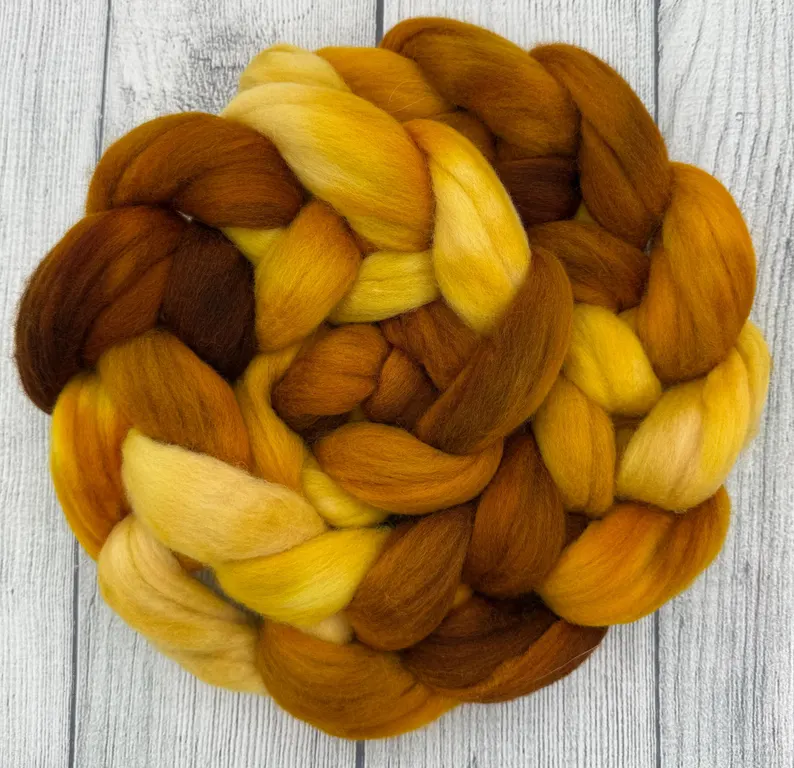
Combed top is a fiber preparation in which the fibers have been combed so they lie mostly parallel in the same direction. During preparation, many shorter fibers, neps, and remaining bits of debris are removed, leaving a smooth and organized length of fiber ready to draft and spin.
The result is a preparation that tends to draft smoothly and gives the spinner a great deal of control. Combed top is traditionally associated with worsted-style spinning, but it can be explored with many drafting styles.
Longer fibers are organized in the same general direction.
An orderly preparation makes the fiber easy to read and control.
The continuous preparation makes it easy to see, split, and plan a hand-dyed color sequence.
The preparation does not dictate the only yarn you can make, but it changes how the fibers are presented to your hands.
Fibers are highly aligned and organized. This gives the spinner a smooth, consistent starting point and is traditionally associated with denser, smoother worsted-style yarn.
Fibers cross and overlap more randomly. Carded preparations are traditionally associated with airy, lofty woollen-style yarns.
They can all become yarn, but they present the fibers to the spinner in different ways.
Combed fibers arranged into a smooth, continuous preparation with a high degree of alignment.
Aligned · smooth · controlledA carded preparation drawn into a continuous rope. Fibers are less uniformly aligned than in top.
Carded · airy · flexibleA broad sheet of carded fiber, often made on a drum carder and useful for blending fibers and colors.
Broad · fluffy · blendableA small rolled bundle of carded fiber, traditionally made with hand cards and suited to woollen-style drafting.
Rolled · lofty · hand-sizedA simplified look at the preparation process.
Raw wool is scoured to remove lanolin, dirt, and other material.
The clean fiber is opened and organized so it can move through the next preparation stages.
Combing aligns the longer fibers and removes many short fibers, neps, and remaining debris.
The aligned fiber is drawn into the continuous, smooth preparation handspinners recognize as top.
Dyeing gives an already organized fiber preparation a new layer of possibility: color placement. Depending on the colorway, a braid may contain long color runs, sharp contrasts, tonal movement, or repeating sections.
Wet processing can also compact a prepared top slightly. That does not mean the preparation is ruined. Before spinning, gently open the braid and test how freely the fibers draft. If needed, lightly loosen compressed areas while keeping the color sequence intact.
Study the color order before splitting the braid.
Loosen compressed areas without aggressively pulling the preparation apart.
How you divide the top changes how often colors repeat in your yarn.
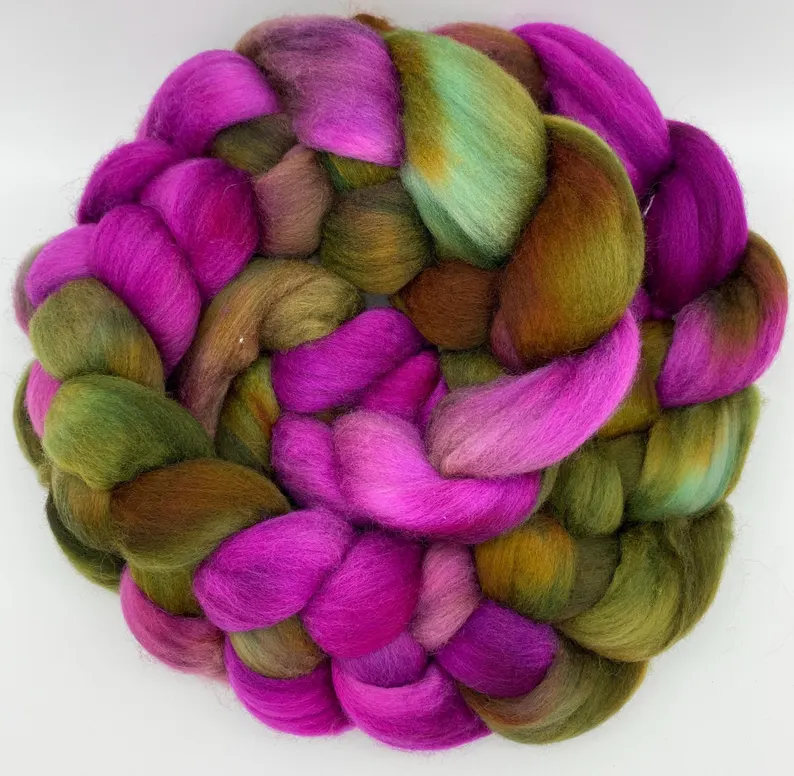
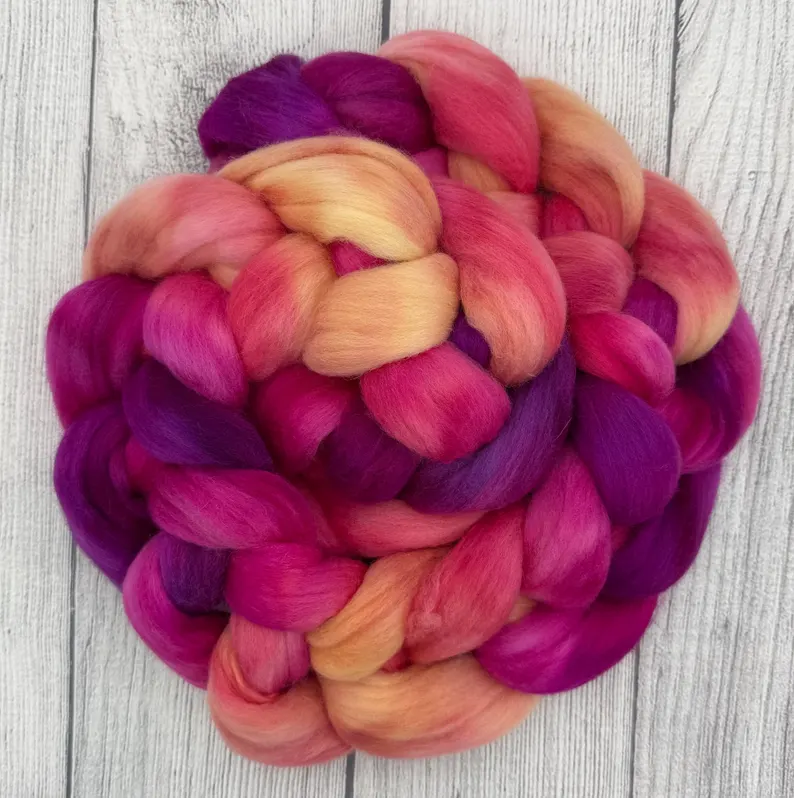
Keeping a braid whole, splitting it into strips, spinning fractally, and choosing a plying method can all change the way a hand-dyed colorway appears in the finished yarn.
How to Spin Hand-Dyed Fiber →Explore AJem colorways, then use Fiber School to decide how you want those colors to move through your handspun yarn.